18 Oct 2026
Tracing the Evolution of In-Play Wagering Features Across Major European Football Leagues
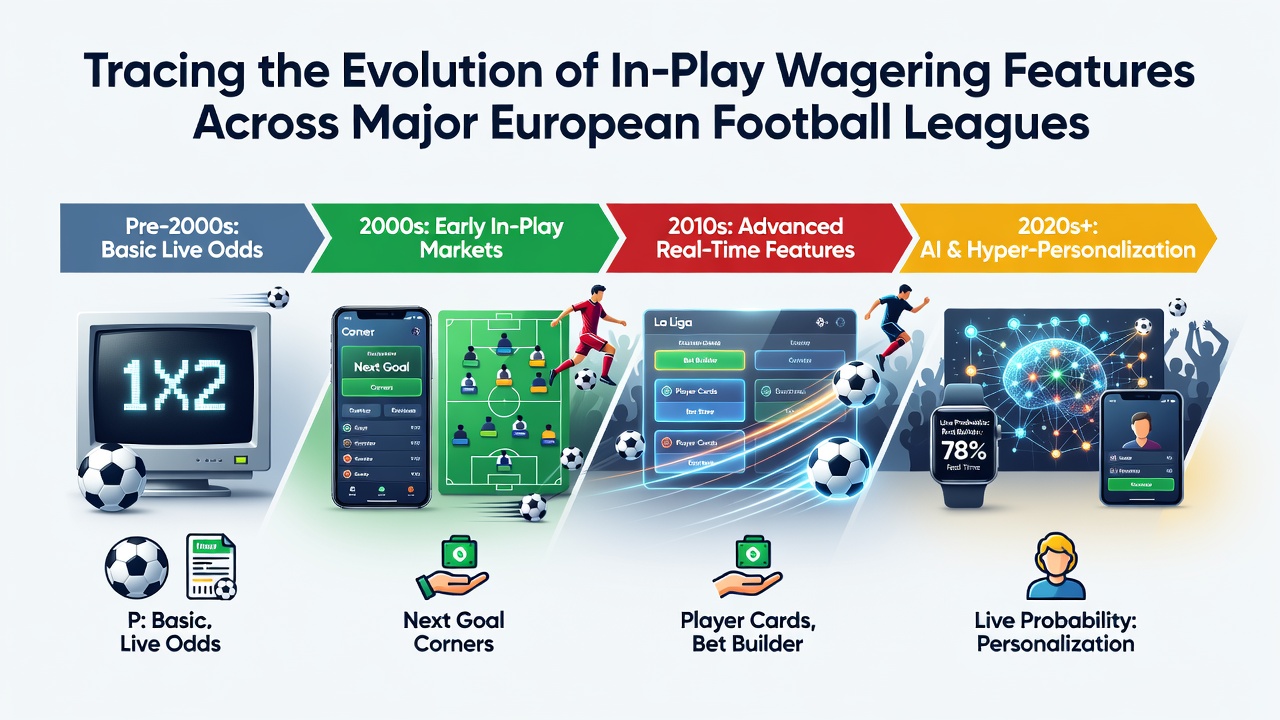
European football leagues began integrating in-play wagering during the early 2000s when operators introduced basic live odds on match events such as goals, corners, and cards. Major competitions including the English Premier League, Spanish La Liga, German Bundesliga, Italian Serie A, and French Ligue 1 saw initial adoption driven by improved satellite feeds and data transmission that allowed real-time updates. Operators expanded from pre-match markets alone to dynamic offerings where bettors adjusted wagers as play unfolded.
Initial Technological Foundations
Research from industry reports indicates that early systems relied on manual data entry from stadium observers who relayed events to central servers, creating delays of several seconds. By 2005 platforms in Germany and Italy had started incorporating automated tracking tools that reduced latency, and those advances coincided with the rollout of broadband internet across Europe. Observers note that the Bundesliga led adoption rates during this period because clubs invested heavily in stadium technology that supported faster data flows.
Expansion Through Mobile and Data Integration
Smartphone penetration accelerated changes after 2010 when operators launched dedicated apps that delivered push notifications for live events. Data shows that Premier League matches generated the highest volume of in-play activity by 2012, with features such as cash-out options appearing first on English and Spanish platforms. Researchers discovered that bet builders emerged around 2014, allowing users to combine multiple in-match variables like player shots on target with team possession percentages. European operators refined these tools further by integrating optical tracking data from providers such as Opta and Wyscout, which supplied granular statistics that powered micro-bets on events occurring every few seconds.
League-Specific Developments Through 2020
Serie A platforms introduced enhanced streaming partnerships by 2016 that let bettors view matches alongside live odds without switching screens. Bundesliga operators followed with similar integrations in 2018 while adding virtual graphics that highlighted key zones on the pitch for over/under markets. Ligue 1 focused on multilingual interfaces to serve broader audiences, and La Liga emphasized player-specific props tied to individual performance metrics. Those who've studied betting volumes report that these tailored features increased session durations across all five leagues during the 2017-2020 period.
What's interesting is how regulatory shifts in various countries influenced feature rollouts, with operators adapting interfaces to comply with local rules on responsible gambling prompts that appeared during live sessions. By October 2026 several platforms had incorporated AI-driven risk assessments that adjusted maximum stake limits in real time based on user patterns observed during high-intensity match periods.
Advanced Features and Market Growth
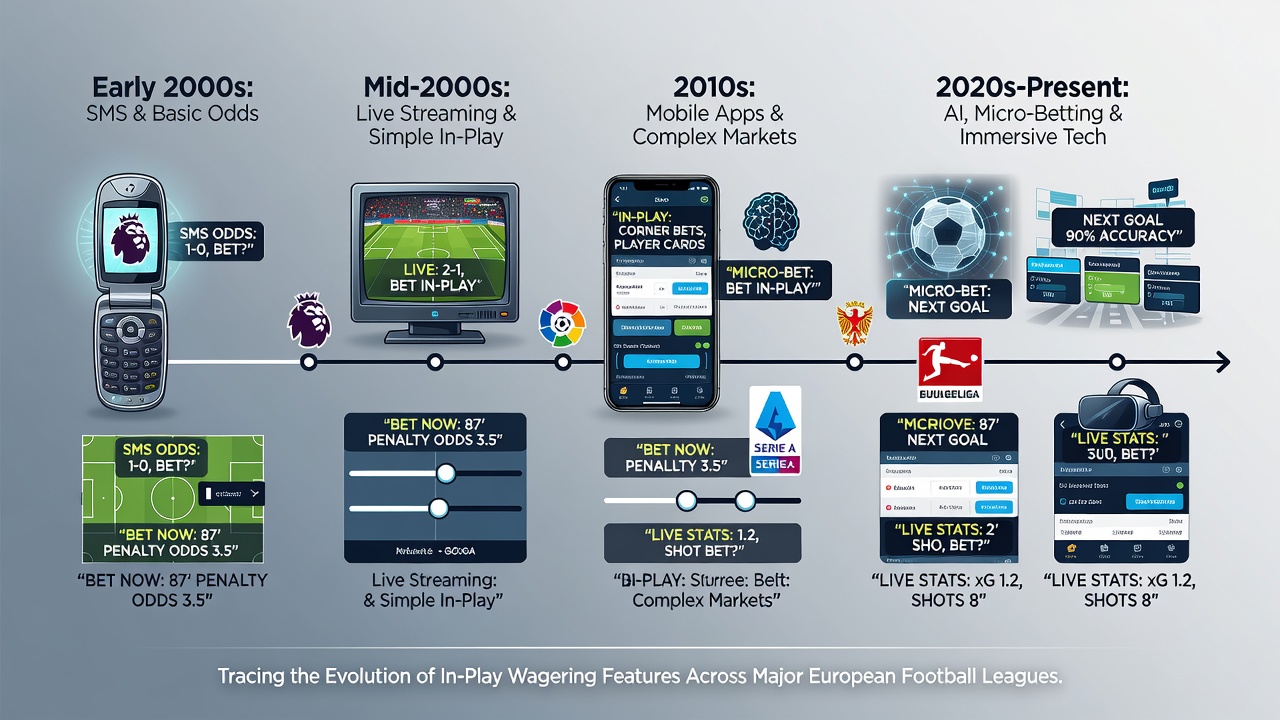
According to figures from the European Gaming and Betting Association, in-play wagering now accounts for over 70 percent of football betting turnover in the five major leagues. Features such as same-game multis and instant settlement on corner or card markets became standard by 2023, while 2025 introduced more widespread use of augmented reality overlays that displayed odds directly on broadcast feeds. European Gaming and Betting Association reports highlight how these tools rely on sub-second data pipelines that connect stadium sensors to global servers. Academic studies from institutions in the Netherlands have examined how these systems affect bettor decision speeds, revealing consistent patterns of increased engagement during stoppage time across Bundesliga and Serie A fixtures.
Current Landscape in October 2026
Platforms serving Premier League audiences now offer predictive markets that update probabilities for the next goal within 30 seconds of a kick-off restart. La Liga operators have expanded live sponsorship integrations where betting menus appear alongside official match graphics. Observers note continued refinement in responsible tools, including mandatory cooling-off periods triggered after rapid sequences of in-play wagers. Data from multiple operators shows that mobile devices handle 85 percent of such activity, prompting further investment in low-latency 5G connections across European stadiums.
Conclusion
The progression from basic live odds to sophisticated, data-rich environments reflects broader technological and regulatory developments across European football. Each league has contributed distinct innovations that operators have adapted and scaled, resulting in a unified yet varied ecosystem of in-play features. Continued advancements in data analytics and connectivity suggest further evolution remains underway.