4 Oct 2026
Altitude's Role in Reshaping Soccer Scoring and Betting Lines at Mountain Venues
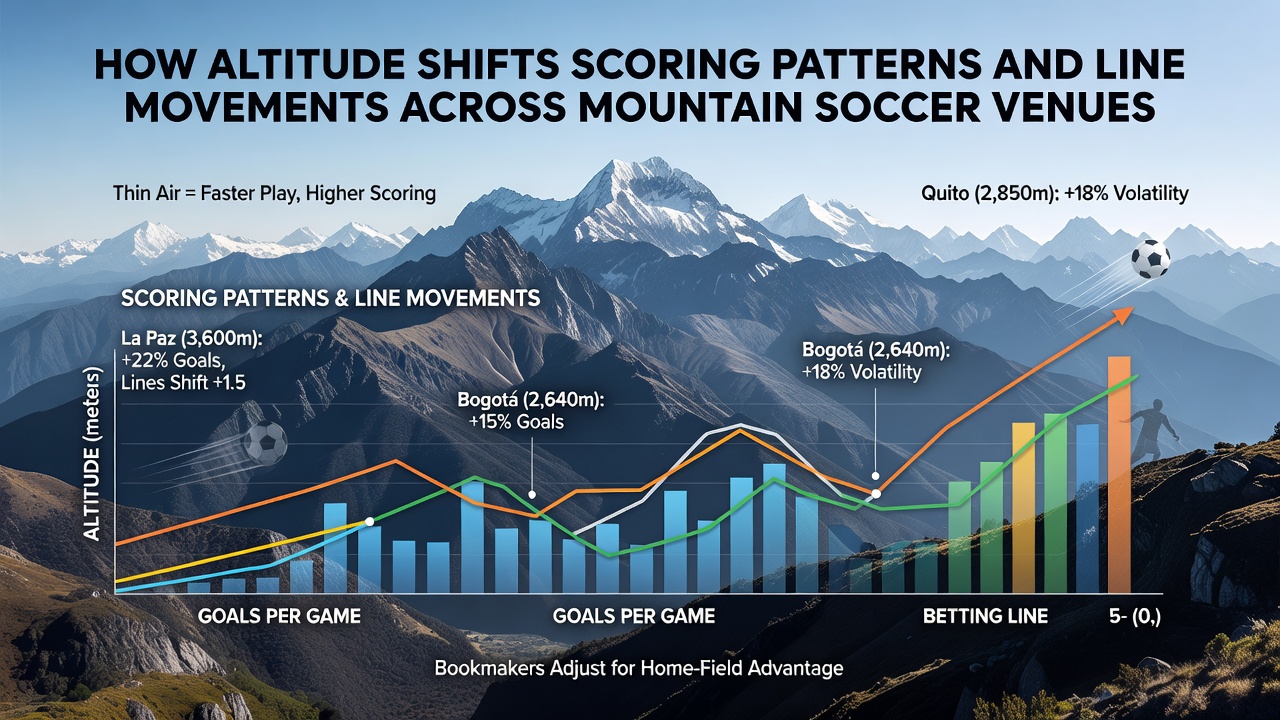
High-altitude venues create distinct conditions that alter player endurance and ball behavior, which in turn influence goal tallies and the odds posted by bookmakers across various leagues. Researchers have documented how reduced oxygen levels at elevations above 2,000 meters lead to quicker fatigue among visiting teams while home sides often maintain higher work rates throughout matches. Data collected from South American and North American competitions shows visiting squads averaging 15 to 20 percent fewer successful passes in the second half when playing at sites such as Estadio Hernando Siles in La Paz or Dick's Sporting Goods Park in Commerce City, Colorado.
Physiological Demands at Elevation
Players experience lower blood oxygen saturation when competing above 2,500 meters, a factor that compounds over the course of 90 minutes and extends into added time. Studies conducted by sports science groups in teh United States and Canada indicate that heart rates remain elevated for longer periods, forcing tactical adjustments such as increased reliance on long balls and reduced pressing intensity. Those adjustments appear in match logs from the 2025 season onward, with teams at altitude recording higher rates of turnovers in midfield zones after the 60-minute mark. October 2026 schedules already list several CONCACAF qualifiers at similar venues, prompting analysts to review historical performance splits before setting initial lines.
Scoring Pattern Variations Across Seasons
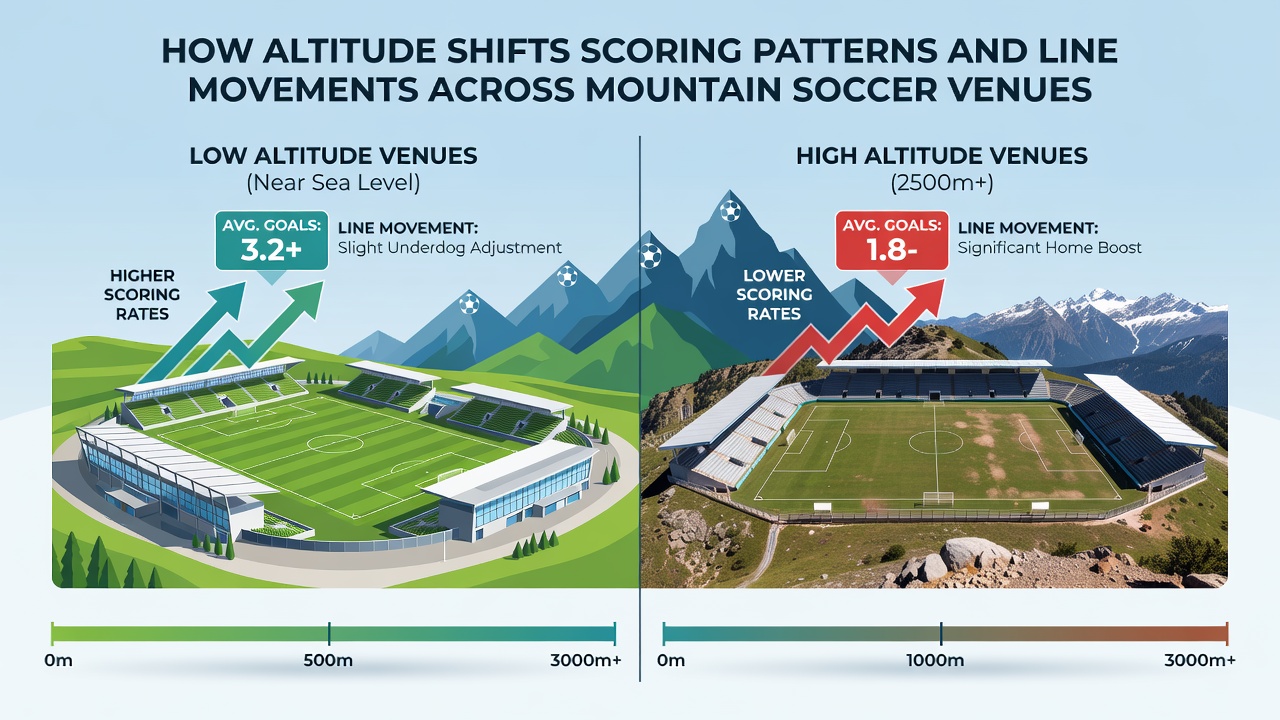
Match statistics compiled over multiple campaigns reveal lower total goals at certain mountain stadiums yet higher home-team win percentages compared with sea-level counterparts. In Bolivia's Primera División, for example, home sides at La Paz have averaged 2.1 goals per game while visitors manage 0.7 across the past five years, according to league archives. Mexican Liga MX fixtures at Estadio Azteca in Mexico City display a different profile, with total goals rising slightly because the ball travels farther through thinner air and favors teams that prioritize width and crosses. European clubs traveling to these locations during international breaks have shown similar drops in expected goals once acclimatization periods fall short of seven days.
Line Movements and Market Responses
Bookmakers adjust totals and handicap markets within hours of lineups being released once historical altitude data enters models. Early totals for matches at 3,000-plus meters often open 0.25 to 0.5 goals lower than comparable sea-level fixtures, then drift further if sharp money targets the under or if starting elevens lack sufficient rest days. A 2024 analysis published by a Canadian research institute tracked line shifts across 180 high-altitude fixtures and found that 62 percent of totals moved toward the under by kickoff, with closing lines averaging 0.3 goals below the opener. Handicaps follow a parallel path, with home favorites typically shortening from +0.5 or -0.25 into stronger positions as public betting concentrates on the altitude advantage.
Venue-Specific Data Points
Observers tracking South American World Cup qualifiers note consistent patterns at Quito's Estadio Olímpico Atahualpa, where Ecuador maintains an unbeaten record in official matches since 2019 when totals close below 2.5. In the United States, Colorado Rapids home games produce fewer corners and shots on target after halftime, metrics that directly feed into player prop markets. Australian and Japanese national team data from friendlies at similar elevations show comparable reductions in high-intensity runs, giving domestic sides measurable edges that betting syndicates incorporate into pre-match pricing. These venue quirks remain stable across different weather conditions yet intensify during afternoon kickoffs when solar radiation adds to dehydration risks.
Preparation and Scheduling Influences
Federations have begun releasing acclimatization guidelines ahead of the 2026 international calendar, including mandatory arrival windows of at least five days for teams crossing significant elevation changes. Such protocols appear in match reports filed with CONMEBOL and have started to influence both team selection and in-game substitution patterns. When visiting clubs arrive with shorter turnaround times, second-half goal differentials widen in favor of the home side, a trend reflected in adjusted live betting markets during the opening 30 minutes. October 2026 qualifiers already list several such fixtures, giving syndicates additional historical samples to refine algorithms that predict both final scores and half-time margins.
Conclusion
Altitude continues to generate measurable deviations in scoring distributions and subsequent line movements at mountain soccer venues. Performance databases, physiological studies, and market tracking all confirm that home sides gain repeatable edges while totals and handicaps require venue-specific calibration. As more fixtures enter the record books through 2026, those patterns supply ongoing reference points for anyone modeling outcomes or monitoring odds adjustments across affected competitions.